
Materials
Where a compostable bag actually breaks down
A compostable bag is engineered for one of three very specific environments. Outside of them, it behaves a lot like a regular bag. Here's how to figure out which path you actually have.
Apr 30, 2026
If you dropped a certified compostable bag into your kitchen trash can three months ago and dug it up today, it would mostly still be there. That isn't a defect. That is the whole point of how it was designed.
A compostable bag is not "biodegradable everywhere." It is engineered to disappear inside a very specific kind of environment. Three of them, to be exact. Outside of those, it behaves a lot like a regular bag with a better cover story.
Here's what each environment actually is, what your bag needs to handle each one, and how to figure out which path is available to you.
1. Industrial composting
This is what most certified compostable bags in the US are designed for.
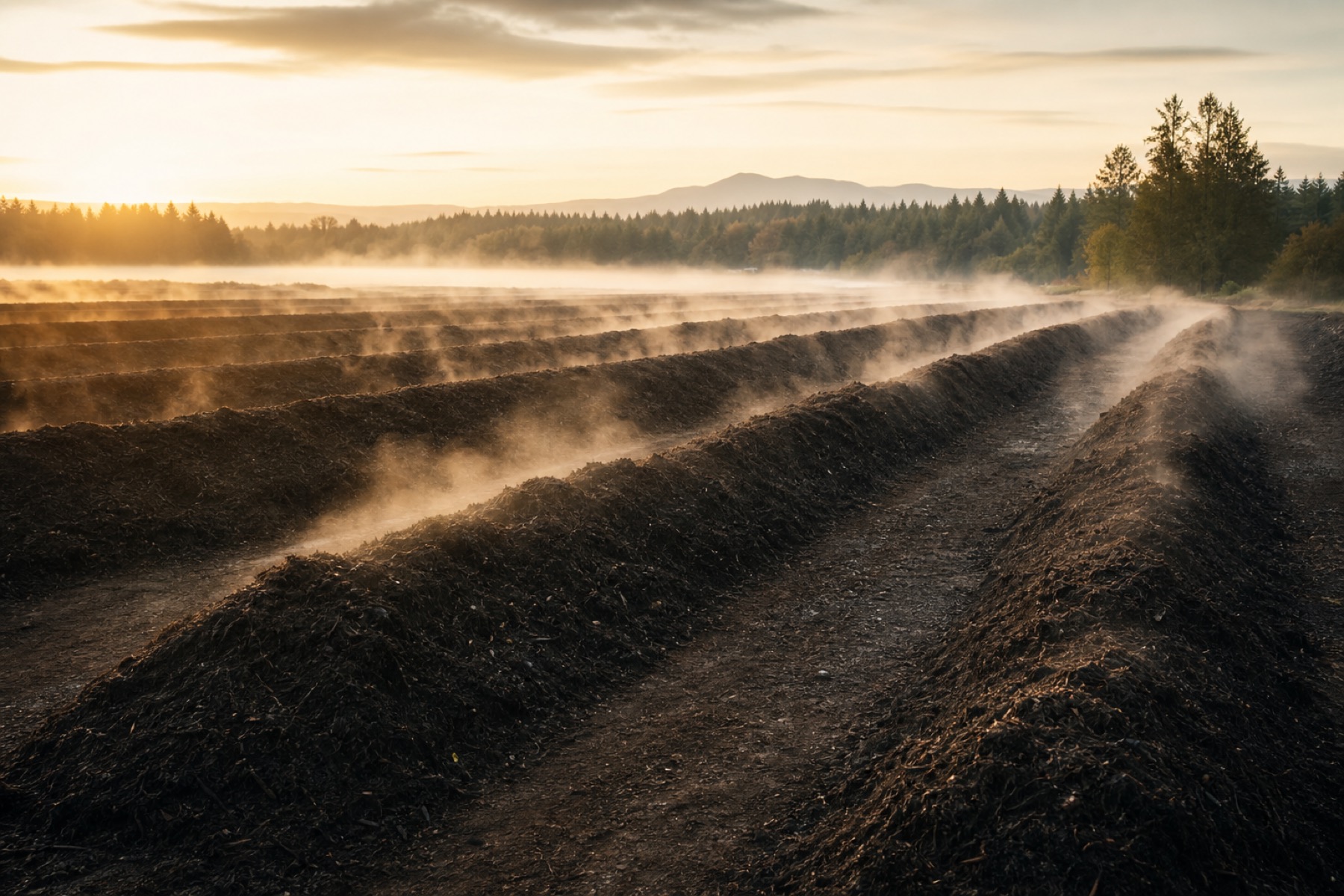
An industrial composting facility maintains a managed pile at roughly 58 to 65 °C (140 to 150 °F), turned regularly for aeration, with controlled moisture and a diverse aerobic microbial community. Bags certified to ASTM D6400 are designed to reach around 90% biodegradation in those conditions within 180 days. Most bags break down faster than that in practice, often inside 60 to 90 days.
The catch: industrial facilities are not universal in the US, and not every facility accepts certified bags. Some prefer to keep their feedstock to food and yard waste only. The Compost Manufacturing Alliance (CMA) certification is helpful here because it field-tests products at real facilities to confirm they actually break down on a working timeline.
If you have curbside organics pickup, your hauler probably sends material to a facility like this.
2. Home composting
This is the slowest and most variable environment.
A backyard pile sits at ambient temperature (usually 20 to 30 °C in summer, much lower in winter), with whatever microbes happen to live in your yard, and whatever moisture you remember to add. A bag that breezes through an industrial facility may sit unchanged in a backyard pile for a year.
If you want a bag that breaks down in your own pile, look for one of two certifications:
- OK Compost Home (TÜV Austria)
- DIN-Geprüft Home Compostable (DIN CERTCO)
Both certify performance at ambient temperatures over roughly 12 months. ASTM does not yet have a published US home compost standard, so the European labels are still the cleanest signal.
A bag labeled simply "compostable" without one of these home marks is almost certainly industrial-only.
3. Municipal organic waste collection
This is the path most US households should be aiming for, because it routes around the home pile entirely.
Curbside organics programs have expanded sharply over the last few years. California's SB 1383 mandate now requires statewide organic waste diversion. Oregon, Washington, Vermont, parts of New York, Massachusetts, Minneapolis, Austin, Denver, and Seattle all run active programs. New programs come online almost every quarter.
Each program has its own rules. Some accept certified compostable bags. Some accept only food and yard waste, with bags pulled out at the facility. Check your city's website before you assume.
When the program does accept bags, this is the best path for most people: no pile to manage, real industrial processing, and your food scraps end up as compost that goes back to local farms.
What if none of those are available?
If you have no curbside pickup, no home-certified bag, and no community drop-off within reach, the honest answer is that a compostable bag will not deliver most of its promise. A few options that still beat the default:
- Find the nearest community drop-off. Many farmers markets host one weekly, even in cities without municipal programs.
- Check ShareWaste, Litterless, or your local zero-waste group for private services or neighbors who compost.
- Use the bag for short-term wet waste so it isn't doing the work of a plastic bag for weeks on end.
- Choose a home-compost-certified bag and start a small backyard or worm bin even if you can only handle a fraction of your food waste.
The bag is a tool, not a wish
A compostable bag is a tool that works inside a system. Without the system, it will not break down meaningfully no matter how good the material is. The most useful thing you can do as a buyer is figure out which of these three environments you have access to, and pick a bag that's certified for it.
The bag should serve the system you have. Not the other way around.
Frequently asked questions
Will a compostable bag break down in my backyard pile?
Only if it is certified to a home composting standard. Look for OK Compost Home or DIN-Geprüft Home Compostable on the packaging. Bags marked only "compostable" or "ASTM D6400" are designed for industrial facilities and will sit largely intact in a backyard pile.
How long does an industrial facility actually take to compost a bag?
The ASTM D6400 standard requires around 90% biodegradation within 180 days at industrial temperatures, but most facilities cycle material faster than that. In practice, a certified bag is usually unrecognizable in 60 to 90 days.
Does my city accept compostable bags in curbside organics?
It depends on the program. Some accept all certified compostable bags. Some only accept BPI-certified or CMA-approved products. Some accept no bags at all and ask you to put food scraps in directly. Check your municipal website.
What if I have no compost option at all?
Look for community drop-offs (farmers markets are a good place to start), private compost pickup services, or peer-to-peer options like ShareWaste. As a last resort, sending the bag to landfill is still marginally better than fossil-fuel plastic, but most of the environmental benefit is lost without a real composting destination.